Ilya’s trauma over his mother’s suicide
Heated RivalryIlya’s trauma over his mother’s suicide begins with a death concealed behind the word accident and returns in two acts of telling: a private disclosure to Shane and a public account tied to the Irina Foundation. The story’s emphasis is not on a simple resolution of grief, but on how Ilya’s account changes—from a version supplied by his father to words Ilya chooses to speak himself, first to someone he trusts and later before an audience.
The Death and the Family’s Account
Ilya remembers his mother as wonderful, but that affection opens onto a painful question from Shane: how did she die? Although almost fourteen years have passed, the question still produces a lump in Ilya’s throat. Time has not made the loss emotionally distant; in the moment, speaking about it remains physically difficult.
The answer he gives first is the explanation his father had given everyone: that his mother died in an accident. Ilya says he had been told this sternly, even though he knew at twelve that it was not true. His sardonic clarification—that she swallowed a whole bottle of pills—makes plain what the euphemism concealed: her death was a suicide. The gap between the family’s official account and Ilya’s childhood knowledge is central to the burden he carries. He had not simply lost his mother; he had also been made to live with a story that denied what he understood had happened.
Telling Shane What Happened
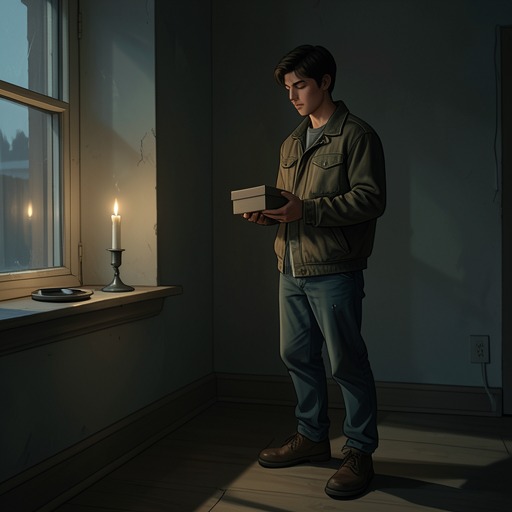
When Shane asks how old Ilya was, Ilya says he was twelve. Then he shares the detail he has never told anyone before: he found his mother. The disclosure arrives after the guarded account of an accident and strips away the distance that the euphemism offered. It is not only the cause of her death that Ilya reveals, but his own direct encounter with its aftermath.
Shane responds by getting to his feet and pulling Ilya into an embrace. Ilya does not cry fully; he quickly wipes at the moisture in his eyes and breathes in Shane’s presence. The narration holds together what he can and cannot do: he can disclose the fact, correct the story, and accept comfort, but he does not turn the moment into a complete release of grief. He asks Shane not to think his mother was weak. She was amazing, he insists, and deeply sad; he also connects that sadness to how hard his father was on her. His account preserves her strength without minimizing her suffering.
The setting sharpens the intimacy of this telling. By the campfire, under the stars and away from anyone who might find them, Ilya wants to hold Shane and not think about his father, his mother, hockey, the rivalry, or what will happen when their two weeks together are over. The refuge does not erase those pressures; it briefly gives Ilya room to speak without having to confront all of them at once.
From Private Disclosure to Public Speech
Later, at the Irina Foundation’s launch, the story of Ilya’s mother returns in a different setting. Shane reads the prepared words in French, explaining that the foundation will raise money and awareness for organizations offering support, counseling, and assistance to people suffering from depression and other mental illnesses that can lead to suicide. He also says the cause matters to both him and Ilya. The foundation turns concern about mental illness into a stated purpose and practical work.
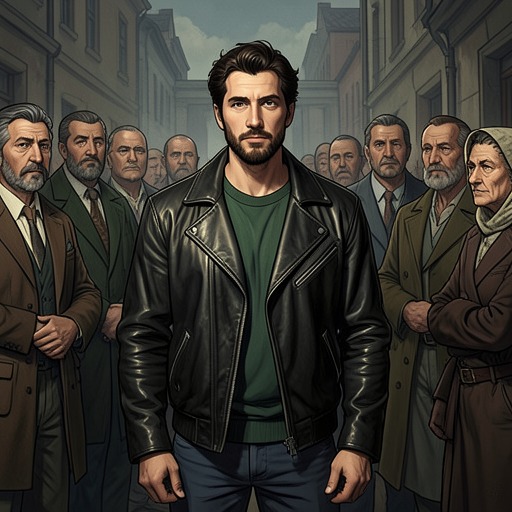
Ilya then speaks in English, smiling as he notes that he can only give his part in that language. What follows is not in the prepared notes. He explains that the foundation is named for his mother and that she battled depression for many years without support or medical treatment. He says she died when he was twelve and describes the foundation as being for her, and for people like her who should not have to fight alone. His account does not repeat the family’s cover story. In front of the audience, he names the suffering and the absence of help that had been hidden inside it.
As Ilya speaks, Shane places a hand on his forearm. After Ilya looks down and sniffs, Shane pats his arm; he wishes he could hold Ilya’s hand or kiss his hair, but he remains beside him in the public setting. The audience’s long silence gives the disclosure space before Shane thanks him and continues with the foundation’s plans. That response links the intimate support of the campfire scene to the more restrained gesture at the launch: in both, Shane witnesses Ilya’s grief rather than replacing his words with his own.
Grief, Witness, and the Foundation
The two disclosures show different consequences of speaking. In private, Ilya tells Shane a fact he says he has never shared with anyone and exposes the personal memory beneath the false account of an accident. At the launch, he makes his mother’s depression and lack of treatment part of the foundation’s public rationale. The first telling establishes trust between the two men; the later one connects Ilya’s loss to an effort to support others.
The foundation does not undo the death or suggest that Ilya’s grief has ended. Instead, its stated work answers a specific absence in his account of his mother’s life: she had no support and no medical treatment. By naming that absence before an audience and dedicating the foundation to her, Ilya changes what can be said about her death. The story moves from a sternly repeated explanation imposed by his father to a testimony in Ilya’s own voice, joined to a commitment that people facing depression and other mental illnesses should not be left to struggle alone.